
![[ai_client_name]](https://terryvehrs.com/wp-content/themes/terryvehrs-pending.com/images/accent-logo-mono.png)

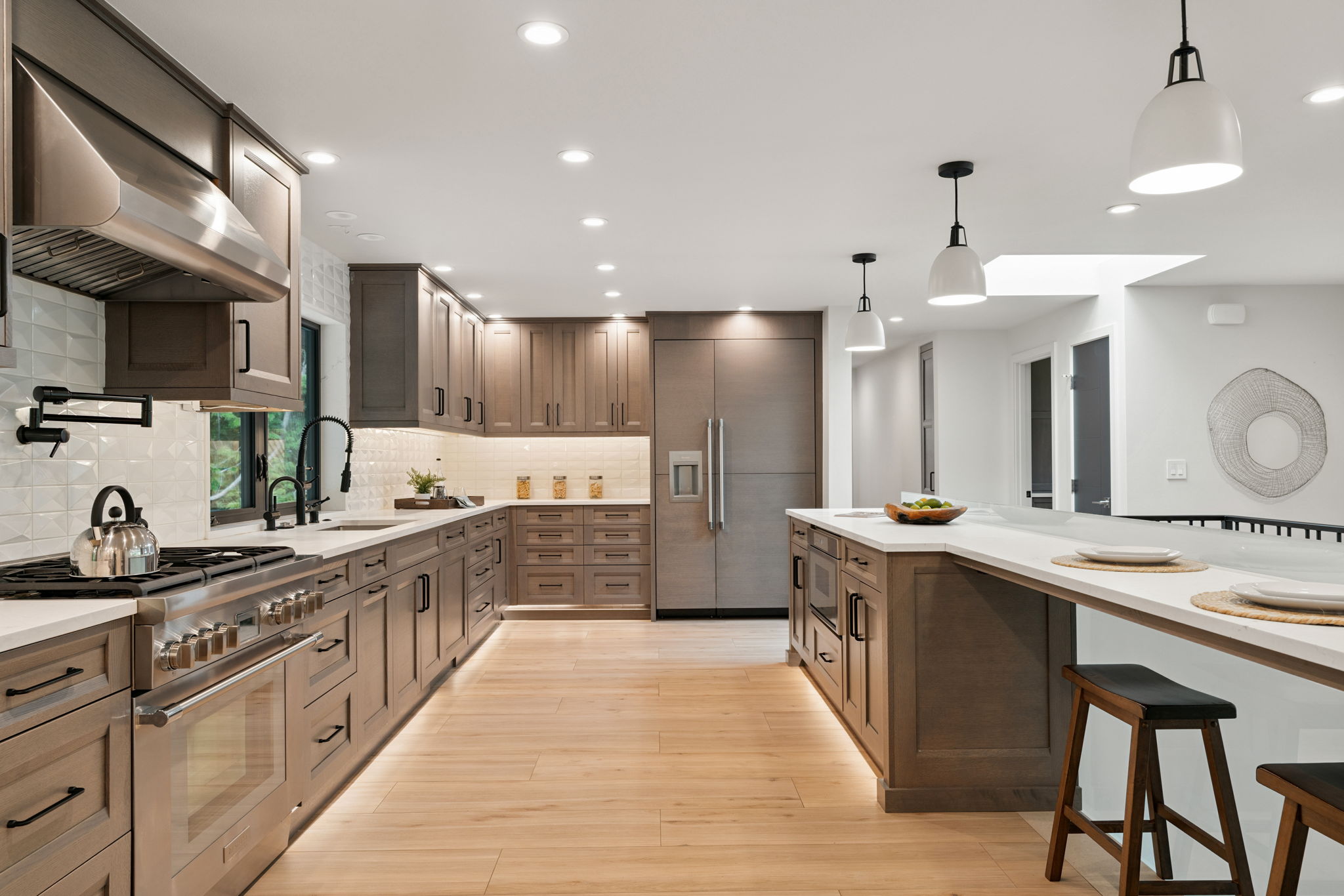
Not every renovation adds value — and some choices can actually make a home harder to sell when the time comes. From over-improving for the neighborhood to sacrificing function for aesthetics, the upgrades that work best are the ones that balance how you want to live today with what future buyers will value tomorrow. Here’s what Terry Vehrs has seen hurt resale value consistently across the Puget Sound communities he works in.
1. Spending More Than Your Neighborhood Can Support
This is one of the most common and most costly mistakes homeowners make — and it happens at every price point. A beautiful renovation doesn’t automatically mean a dollar-for-dollar return. When you invest significantly more into a home than comparable properties in the neighborhood can support, you hit what real estate professionals call the neighborhood ceiling.
In practical terms: if homes on your street consistently sell between $850,000 and $950,000, spending $150,000 on a full kitchen and bathroom gut renovation won’t push your sale price to $1.1 million. Buyers compare your home to everything else available in that price range — and if your $150,000 renovation brings you to a price point where buyers have more options, you’ve spent money that won’t come back.
This is particularly relevant across Terry’s market where the price gap between neighborhoods is meaningful. In Edmonds, Westgate, Seaview, and Meadowdale have different price ceilings than The Bowl or Talbot Park. Similarly, neighborhoods in Shoreline and Mukilteo each have their own comp ranges that renovations need to respect. Knowing where your home sits relative to its neighborhood comparables — before you renovate — is the most important conversation you can have with a knowledgeable local agent.
What to consider instead: Focus on improvements that bring your home up to neighborhood standards rather than beyond them. A minor kitchen refresh — new hardware, paint, updated appliances — consistently returns 70-80% of its cost nationally. A major kitchen gut renovation returns 40-60% at best.
2. Design Choices That Only You Will Love
Bold tile choices, highly specific built-ins, unusual color palettes, themed rooms, and niche design statements can make a home genuinely memorable — but they can also make it significantly harder to sell. The more permanent and personal a design choice is, the more carefully it deserves to be considered through a resale lens.
The challenge is twofold. First, buyers who don’t share your taste see personalized features as projects — things they’ll need to pay to undo before they can make the home their own. Second, highly specific design choices limit your buyer pool to the subset of buyers who happen to love exactly what you love. In a market like Edmonds where buyers are discerning and well-informed, a home that immediately requires significant cosmetic work will be priced accordingly.
This doesn’t mean your home should look like a model unit with no personality. Warmth and character are genuine selling assets. The distinction is between choices that most buyers find appealing and choices that only a specific buyer will appreciate. When in doubt, opt for the version that’s easier to change — furniture, art, and décor rather than structural or permanent installations.
What to consider instead: Express personality through furnishings and styling that can be moved. Keep permanent elements — tile, cabinetry, flooring — in the range of current buyer preferences. Neutral doesn’t have to mean boring; it means broadly appealing.
3. Turning Bedrooms Into Something Else
Bedroom count is one of the most fundamental drivers of home value in this market. Converting a bedroom into a home gym, a walk-in closet, a craft room, or an office can improve your daily life significantly — but it can also remove your home from an entire segment of the buyer pool when you sell.
Buyers search by bedroom count. A three-bedroom home and a two-bedroom-plus-office are not equivalent in most buyers’ minds — and they’re not equivalent in how search algorithms surface listings. In Edmonds and South Snohomish County, the difference in median price between a two-bedroom and three-bedroom home can be significant, often more than the cost of any renovation that consumed the third bedroom.
If you’ve converted a bedroom and are planning to sell, reversing that conversion before listing is almost always worth the investment — even if the reconverted room isn’t furnished as a bedroom, having the closet and door in place allows the listing to reflect the true bedroom count.
What to consider instead: Use multifunctional furniture and flexible layouts to create the spaces you want without permanently altering the bedroom count. A Murphy bed in a home office preserves both functions for buyers.
4. The Deferred Maintenance That Catches Up With You at Closing
A beautiful new kitchen won’t make buyers forget about an aging roof, moisture in the crawl space, or a deferred HVAC system. Buyers at every price point have become more thorough about inspections, and the cost of deferred maintenance almost always shows up — either as a price negotiation, a repair credit, or both.
More than that, buyers in today’s market are doing their homework before they even tour a property. An inspector’s report that reveals significant deferred maintenance can unravel a transaction that took weeks to get to that point — and the seller is often worse off for it than if the issues had been addressed before listing.
In Terry’s experience, the return on maintenance investments made before listing is consistently better than the return on cosmetic renovations. A well-functioning home with no deferred maintenance and a dated kitchen will often outsell a beautifully renovated home with a questionable roof — because buyers can see past dated aesthetics but can’t ignore known structural or mechanical concerns.
What to consider instead: Before any cosmetic renovation, address the fundamentals. Roof, HVAC, plumbing, electrical, crawl space — these are the things that derail transactions. Get them right first, then consider whether cosmetic investment makes sense given your price point and neighborhood.
5. Do-It-Yourself Work That Looks Like It
Not every project needs a contractor — but when workmanship is visibly inconsistent, or when improvements involve electrical, plumbing, or structural changes, buyers and their agents notice. More importantly, inspectors notice. And when an inspector flags unpermitted work or workmanship that raises questions, the conversation shifts from price to liability.
In Washington State, sellers are required to disclose known material defects and unpermitted work on the Seller Disclosure Statement. DIY projects that weren’t permitted and don’t meet code create disclosure obligations and can become negotiating points regardless of how good the final result looks.
The standard across Edmonds, Shoreline, and Mukilteo is high — buyers at these price points expect professional quality throughout. Work that signals deferred quality or corner-cutting will be priced into offers accordingly.
What to consider instead: Know your limits. Painting, landscaping, and basic cosmetic work are generally safe DIY territory. Electrical, plumbing, structural work, and anything that requires a permit should involve licensed contractors. The cost of doing it right is almost always less than the cost of negotiating around it during a sale.
6. Designing for Photos Instead of Real Life
Open-plan renovations that eliminate storage, layouts designed entirely for how they photograph rather than how they function, and spaces that look spectacular but don’t work well in daily life are a recurring pattern in the market. Buyers who tour in person experience the reality — and reality always wins over photography.
Removing storage to create an open, clean aesthetic is a particularly common issue. In the Edmonds, Shoreline, and Mukilteo market, where homes often serve as primary residences for long periods, buyers are thinking about where everyday life happens — where they’ll store their outdoor gear, their costumes, their seasonal items. A home that photographs beautifully but has nowhere to put anything will generate comments in showing feedback.
What to consider instead: Balance aesthetics with practicality. The most sellable homes are the ones that feel both beautiful and livable — where the design serves the way people actually use the space, not just how it looks in listing photos.
7. Investing Without Asking What Buyers Actually Want
The most fundamental version of all the mistakes above is simply not asking — before investing — what buyers in your specific neighborhood at your specific price point are actually looking for. The answer varies meaningfully by location, price band, and current market conditions.
A conversation with a knowledgeable local agent before you renovate is worth considerably more than that same conversation afterward. Understanding the neighborhood ceiling, current buyer preferences, and which improvements are likely to generate returns versus which are personal enjoyment investments allows you to spend your renovation dollars where they’ll actually work for you.
In Terry’s experience, the sellers who navigate renovation decisions most successfully are the ones who ask early — before the contractors are scheduled, before the tile has been ordered, before the decision is made. The sellers who struggle are the ones who invested heavily in improvements that felt right at the time without checking what buyers in their specific market were actually going to value.
The best renovations balance how you want to live today with what future buyers will value tomorrow. When those two things align — when an improvement you genuinely want also happens to be something buyers consistently pay more for — invest confidently.
When they diverge — when a renovation is primarily for your own enjoyment and unlikely to return its cost at resale — make it with eyes open. There’s nothing wrong with improving a home for your own satisfaction. Just don’t count on the market to pay you back for it.
Frequently Asked Questions
Which renovations have the best return on investment in the Edmonds market?
The 2026 Cost vs. Value data is consistent with what Terry sees locally: exterior improvements tend to deliver the strongest returns. Fresh exterior paint, updated garage doors, landscaping, and minor kitchen refreshes consistently outperform major gut renovations. The Pacific Northwest market tends to over-index on curb appeal and outdoor living — a well-maintained exterior and usable outdoor space reliably add value in this market.
Should I renovate before selling or sell as-is?
It depends on the condition of the home, the price point, and what the local market is currently rewarding. In some cases, targeted pre-listing improvements — fresh paint, professional cleaning, updated fixtures — produce a strong return. In others, especially in competitive neighborhoods with limited inventory, selling as-is and pricing to reflect condition is the better strategy. Terry can walk you through the specific math for your home before you commit to either approach.
Does a major kitchen renovation add value in Edmonds?
A minor kitchen refresh — updated hardware, paint, new countertops, refreshed appliances — typically returns 70-80% of its cost and can meaningfully improve a home’s competitive position. A major kitchen gut renovation — new layout, custom cabinetry, high-end appliances throughout — typically returns 40-60% of cost nationally, and that figure is sensitive to your specific neighborhood ceiling. Whether a major kitchen investment makes sense depends entirely on your price point and how your home compares to current competition.
What should I fix before listing my home in Edmonds?
Address deferred maintenance first — roof, HVAC, crawl space, plumbing, and electrical. These are the things that derail transactions and give buyers leverage in negotiations. After those fundamentals are in order, focus on fresh paint, clean landscaping, and professional deep cleaning. Those three investments are inexpensive relative to their impact on buyer perception and consistently deliver strong returns at every price point.
Thinking About Renovating Before You Sell?
Before you schedule the contractors, a conversation with Terry Vehrs can help you understand which improvements are likely to pay off in your specific neighborhood and price range — and which ones are better left for the next owner. No pressure, no obligation.
Call or text: 206.799.9500
Terry Vehrs · Windermere Real Estate M2 LLC · Serving Edmonds, Shoreline, Mukilteo & South Snohomish County
Disclaimer: The information contained in this post is believed to be accurate as of the date of publication but is not guaranteed. Return on investment figures referenced are national averages from industry sources and may vary significantly by local market, neighborhood, and property condition. All information should be independently reviewed and verified by the reader. This content is intended for informational purposes only and does not constitute legal, financial, or real estate advice. For the most current and property-specific information, please consult directly with Terry Vehrs or the appropriate local, county, and state agencies. Terry Vehrs | Windermere Real Estate M2 LLC | Licensed in Washington State.
